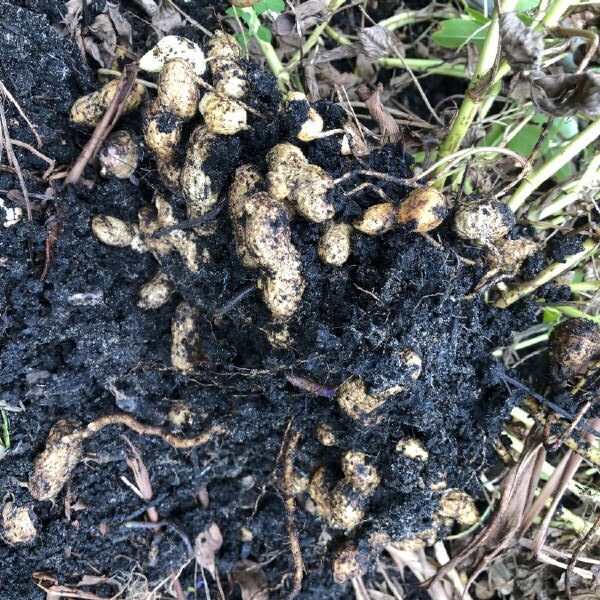
The peanut experiment: totally rookie
I wanted to see if it’s possible to grow a crop that delivers fat, so I decided to try growing peanuts—something I had never done before. Between planting and harvesting, the Strait of Hormuz was closed, and the project suddenly felt more relevant, which is why I want to share my experience..
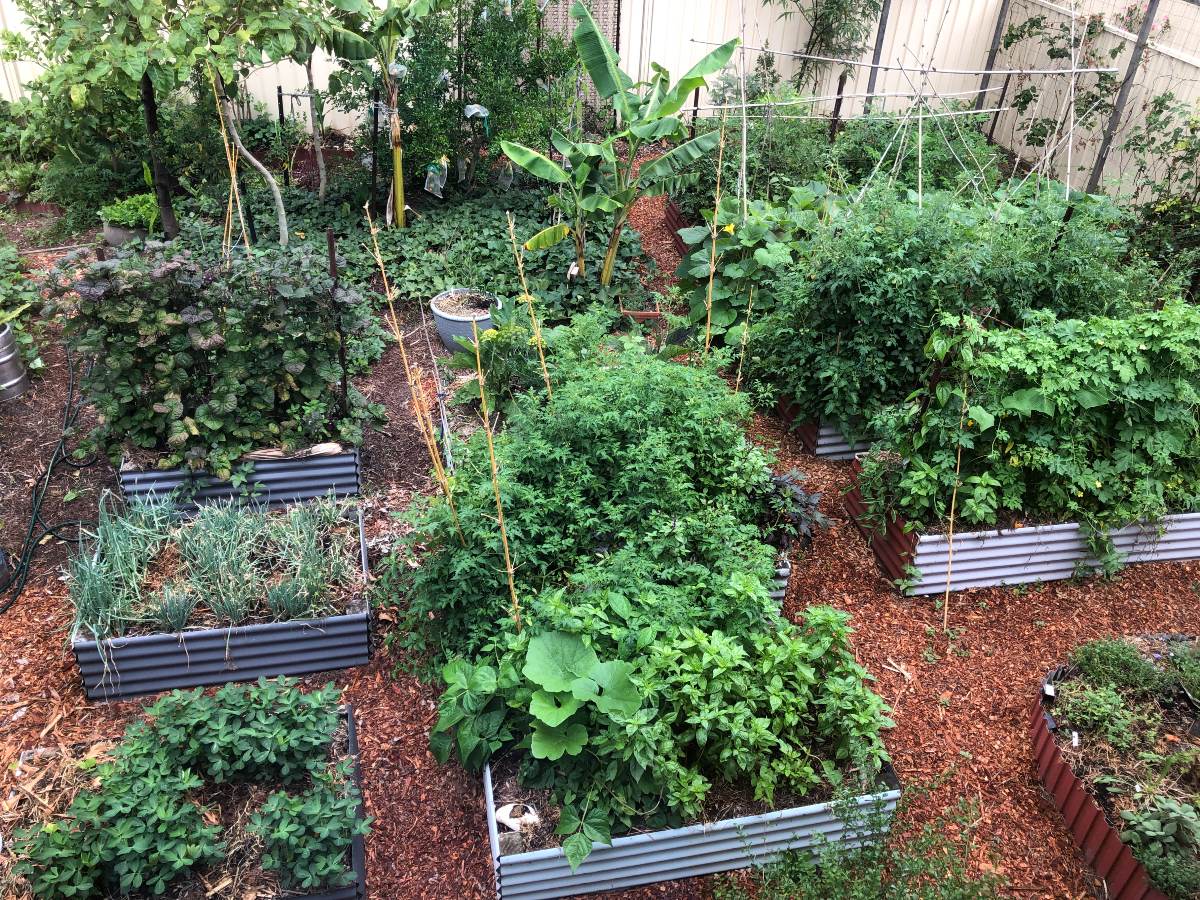
I planted them in a raised bed of just over 1 m². My setup wasn’t ideal: the spacing was a bit tight, and the raised bed likely limited their ability to peg and form more nuts. On the positive side, drainage was excellent.
I’m aware that the fat profile of peanuts isn’t ideal, being high in omega-6 and almost lacking omega-3, especially in the context of modern diets already rich in omega-6—but maybe Michal can talk more about that topic.
My setup
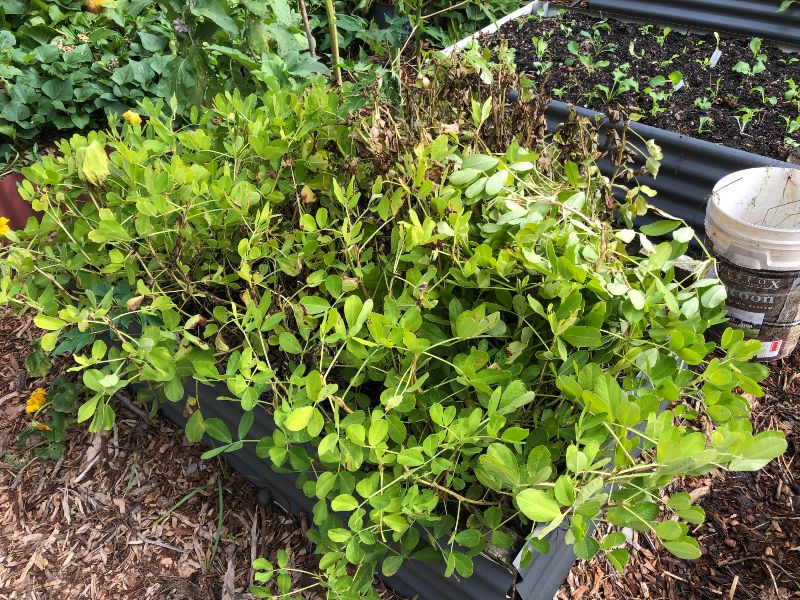
This is the little bed I grew my peanuts in – just slightly over 1 square meter. You can see how the plants hang over the metal edge and there is nothing they could peg into. Next year, I’ll plant them in the ground without raised bed.
And the Harvest
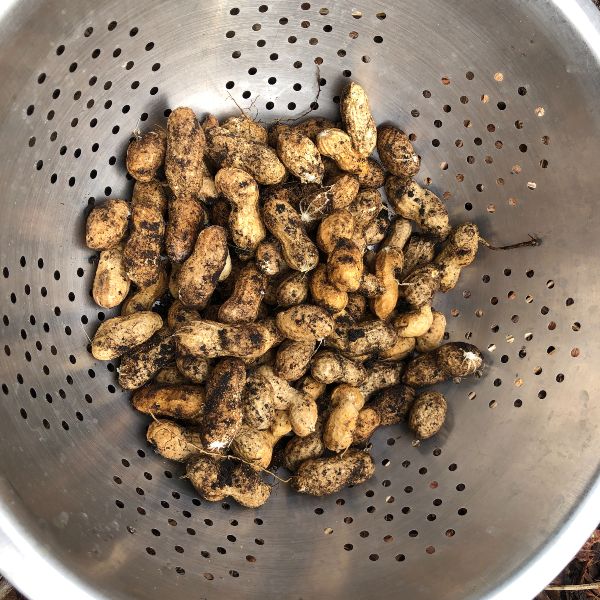
The plants are harvested before totally dying down, when the leaves start to yellow. I simply grabbed them and ripped them out and I got most of the peanuts this way, there were only few left behind. I thought I would get only a few nuts here and there but boy I was amazed how many there were! This is the amount I got from one plant. The whole bed gave me the entire sieve, but I want to show the harvest of just one plant.
Peanuts and the soil
This was quite astonishing: peanuts are legumes and therefore they should fix nitrogen and put it into the soil, which of course does gets taken out via the yummy peanuts we harvest. But there were a huge amount of earthworms around the peanuts, much more than I’ve seen on a plant ever. They seem to be earthworm breeding machines. The other thing that I found interesting that there were papaya seedlings in the vegetable bed (I am sure my husband did it -what is papaya doing in a vegetable bed??) and the peanuts seemed to crowd around the papaya root. Was it a coincidence? Maybe. But I would be curious to know if others have had a similar experience with earthworm activity around peanuts.
Drying the harvest
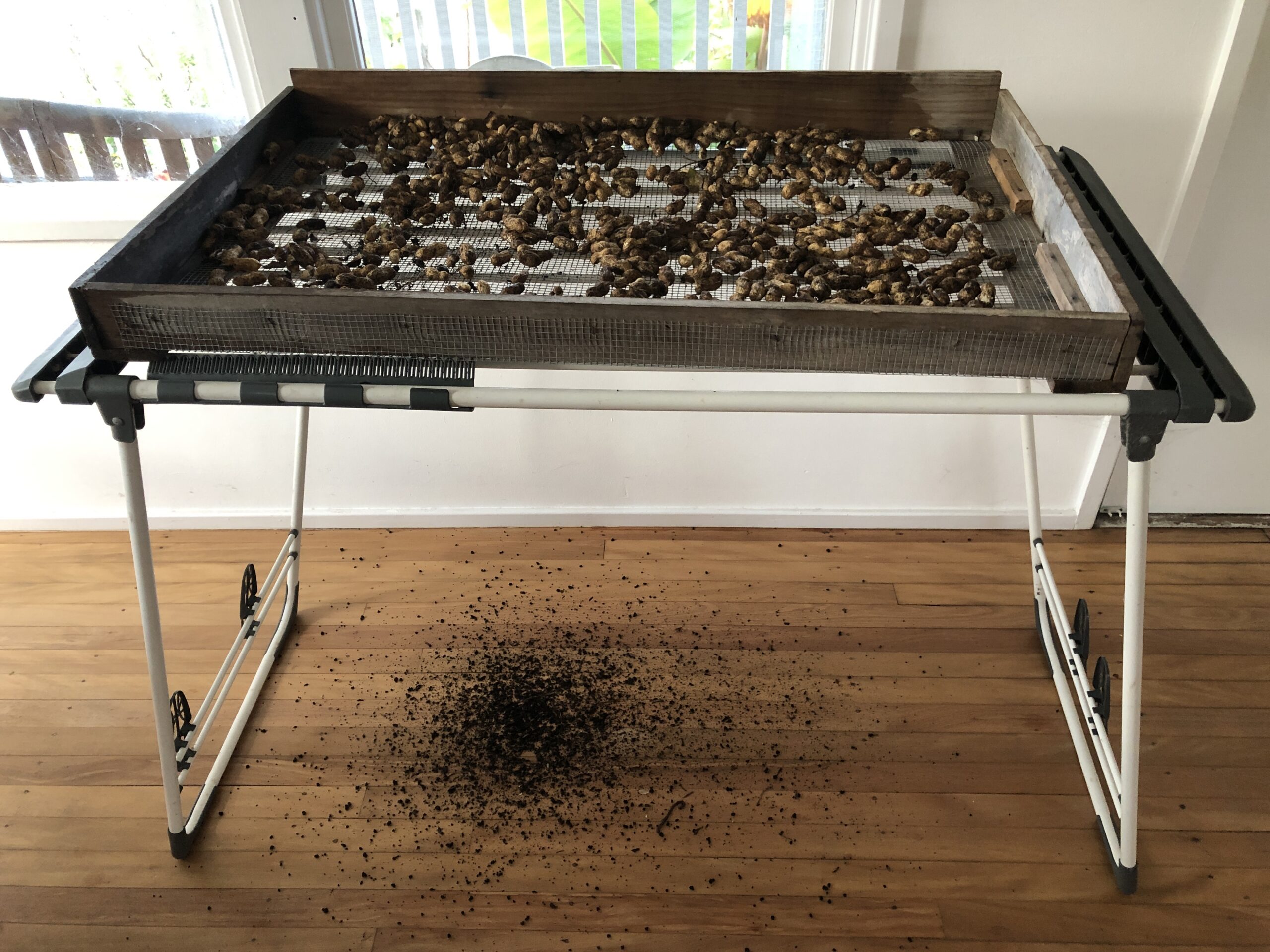
You are not supposed to wash the peanuts because it could cause toxic mold and peanuts are very prone to mold. This is our herb drying rack (TM) and this is how it looks when you’re not supposed to wash them. Drying needs to be done in a very well ventilated space without access of birds and other wildlife.
The verdict:
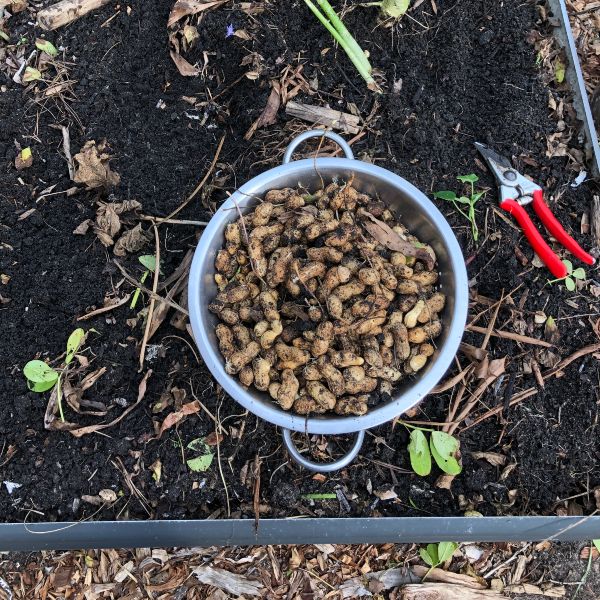
The harvest was one colander full of peanuts on 1m2 – of course unhulled, but anyway, I find it good enough to repeat the excersise. In hotter areas, the harvest is probably better. I think growing staples will be more of a thing in the coming months and maybe years, but maybe I’m wrong and that would be a good thing! Tell me more about your staples and peanuts!