Galangal and Rose Geranium Harvest: Quick Recipes for Syrups and Candies
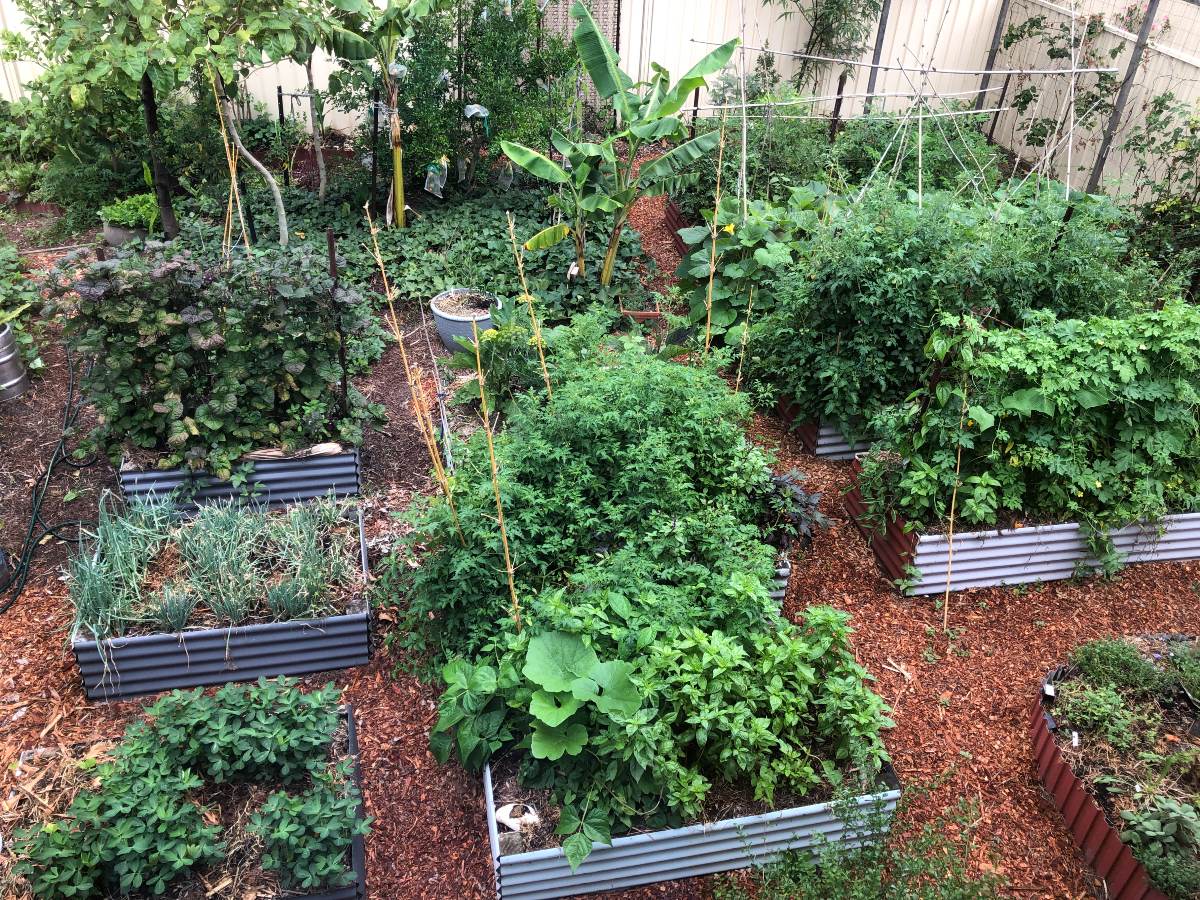
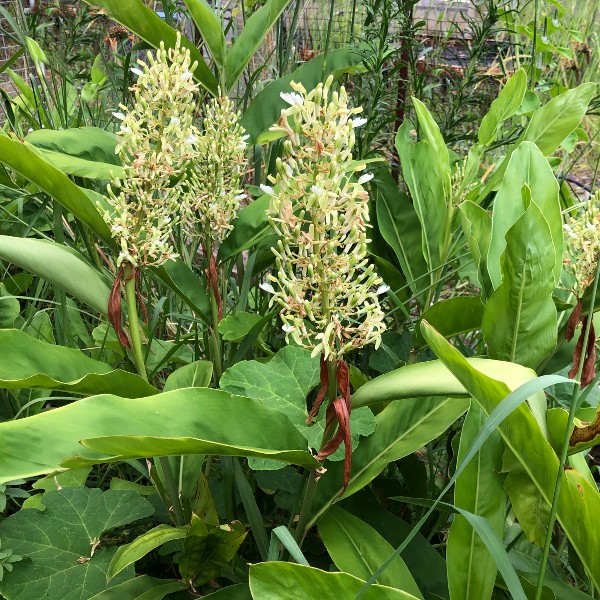
I don’t know why I planted a whole row of Galangal, but now I know for sure that a single plant is enough for an average family. I love all the gingers — their tropical look, especially when towered by banana plants, makes me imagine a little tropical paradise.
Of the whole row, I harvested just one plant. If I had done it right, I would have waited 12–18 months for bigger roots and maximum pungency. In fact, you don’t need to dig up the entire plant to harvest — removing a portion of the rhizome and leaving the rest to grow is perfectly feasible.
I also had a heavenly scented Rose Geranium in the middle of a small herb bed. It had grown way too large and needed relocating. Pruning it back heavily gave me a mountain of sweetly scented leaves. I love working with rose geraniums — the scent is soft, floral, with a hint of citrus.
With little time on my hands, I needed a quick way to turn the abundance into something useful. I made rose geranium syrup and used the galangal to make candied galangal, which also yields syrup. Most of the galangal, however, was air-dried for later use.
In this post, I’ll show:
How to make a simple herbal syrup with fresh herbs
How to dry galangal without a dehydrator
How to make candied galangal and galangal syrup at the same time
Galangal and Rose Geranium: Prepping for Syrup and Candied Treats
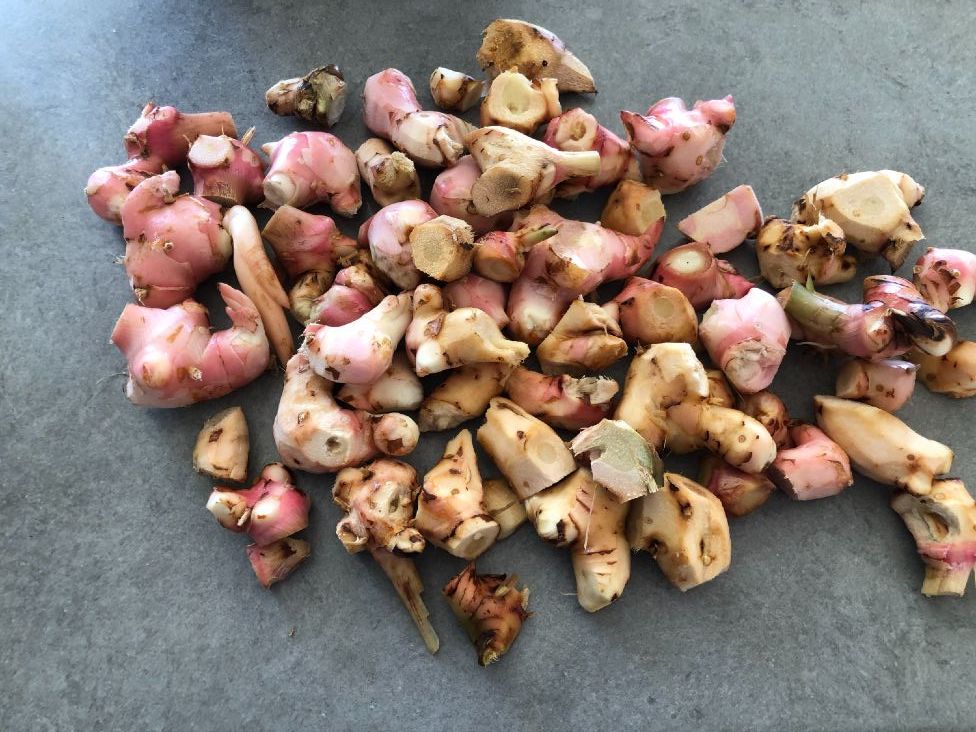
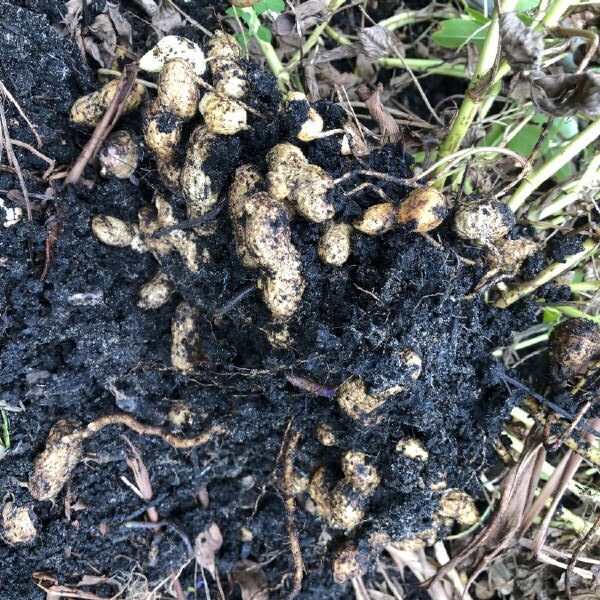
Preparing the galangal was the hard bit. Even after rinsing it with a hose, it was still a lot of work to clean all the dirt out. I wonder if a pressure washer would have done a good job. I threw the fleshy parts of the stems out, apparently, they have a mild aroma and can be used fresh in soups etc.
I gave the rose geranium leaves a quick rinse and spun them dry in a tea towel – maybe I should buy a salad spinner – what do the neighbours think?
Universal Herbal Syrup Recipe: Make Syrup from Any Herb
You don’t need a different recipe for each herb you want to make a syrup. Here is the general recipe that works for almost any herb:
Method
For roots (like galangal, ginger, turmeric):
Slice or lightly crush the roots.
Simmer in water for 30–60 minutes until the flavor is fully extracted.
Strain the liquid.
Add sugar and heat gently until dissolved, or combine sugar during simmering.
For delicate leaves or flowers (like rose geranium, mint, basil, lavender):
Keep leaves whole if possible to avoid grassy or bitter flavors.
Pour hot sugar syrup over the fresh leaves or flowers.
Let steep for several hours or overnight, then strain.
Tips for mixed herbal syrups:
Boil roots first to extract flavor.
Strain, then add sugar and steep leaves or flowers afterward.
Store syrup in sterilized jars or bottles in the fridge.
This approach preserves fragrance, flavor, and beneficial properties of each herb, whether you’re working with robust roots or delicate leaves.
Note: This recipe is not shelf-stable. For a shelf-stable recipe, the syrup would have to have enough acidity and be water-bath canned.
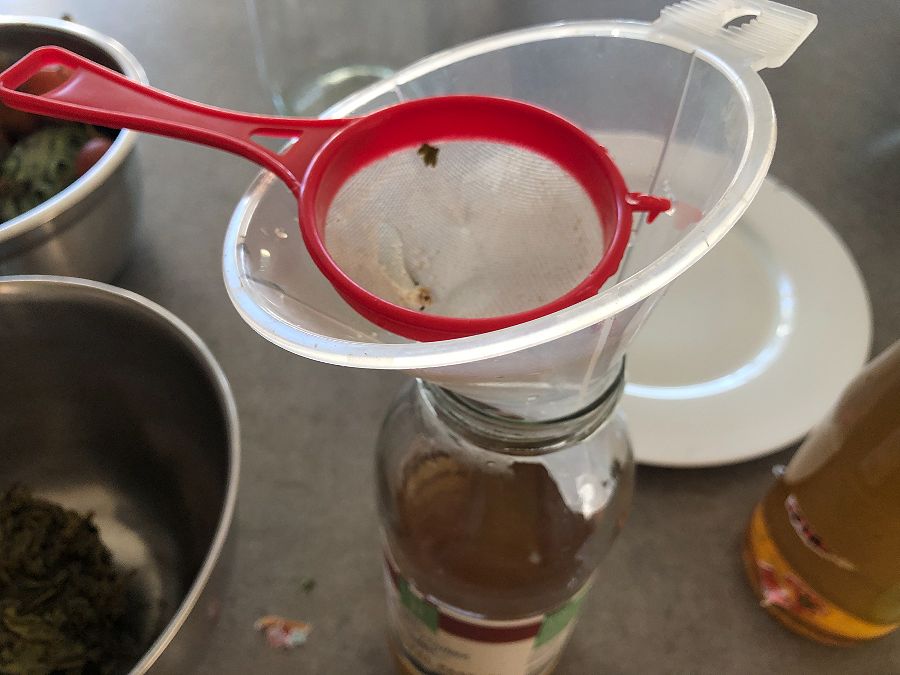
How to Make Galangal Syrup & Candied Galangal
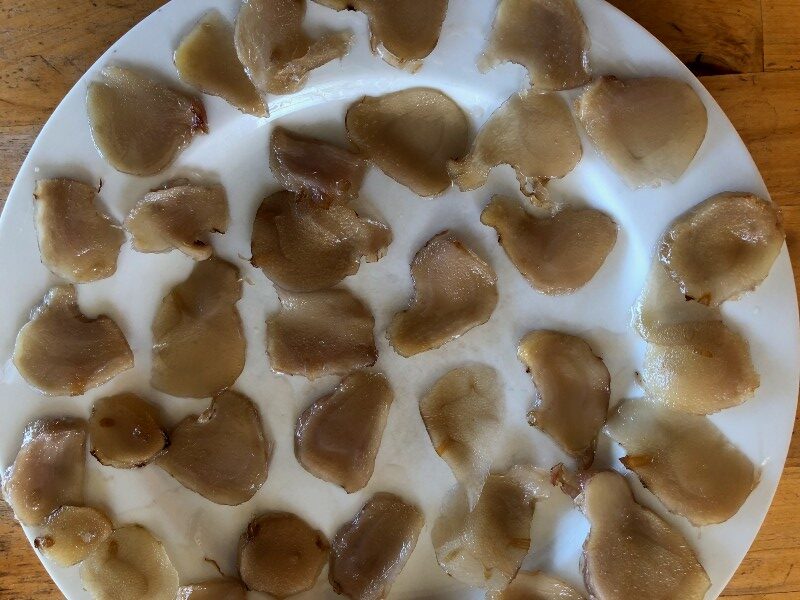
To make herbal syrup and candied galangal at the same time, I cut the galangal into thin slices. After cooking, the syrup is strained off, leaving the candied galangal pieces. I simply dried them on a plate. Normally, candied slices are tossed in extra sugar after drying, but mine were already very sweet from the syrup.
I followed a recipe that used 120 g of galangal with 2 cups of water and 2 cups of sugar. Next time, I plan to add more galangal so the syrup will be less sweet and have a spicier, more pronounced flavour.
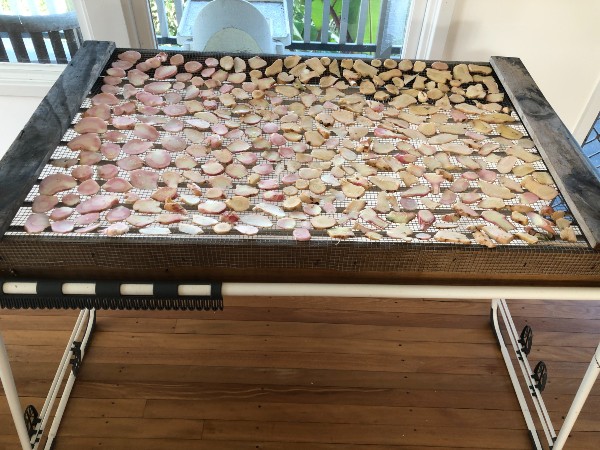
How to Air-Dry Galangal
I opted for cheap air-drying of my galangal slices, and it worked very well. They were dry in two days on the drying rack. The key to drying any root or herb is to slice it thinly, and galangal is fairly hard to cut. This rack is easy and inexpensive to build; it would be even better as a foldable version!
How to Make Rose Geranium Syrup
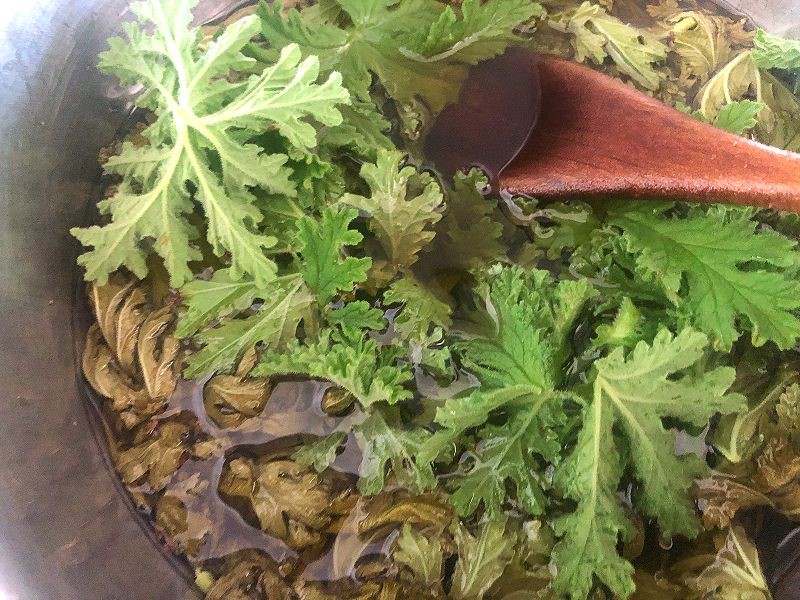
With the rose-geranium syrup, I was a bit smarter. I used the standard syrup ratio of one cup of water to one cup of sugar and dissolved it by boiling. Once the mixture boiled, I removed it from the heat and added the leaves. I loaded in as many leaves as I could fit, without weighing them — I wanted as much flavour as possible. I did not cut the leaves, because when cut they started to smell grassy, and I wanted the true rose fragrance, not a lawn-like scent! I covered the mixture and strained and squeezed it the next day.
Note: This syrup is not shelf-stable and must be kept in the refrigerator.
Creative Uses for Galangal and Rose Geranium Syrups
- In plain water: plain water, some icecubes make a refreshing drink on hot sweaty days! That is our main use.
In teas and hot drinks: Stir a spoonful into black, green, or herbal teas for a fragrant, naturally sweet boost.
Over desserts: Drizzle on ice cream, pancakes, waffles, or cakes for a subtle floral or spicy note.
Cocktails and mocktails: Mix into sparkling water, lemonades, or cocktails to add a unique herbal flavour.
Fruit and yoghurt: Pour over fresh fruit or swirl into yoghurt for breakfast or a healthy snack.
Salad dressings or marinades: Add a small amount to vinaigrettes or marinades for a lightly sweet, aromatic touch.