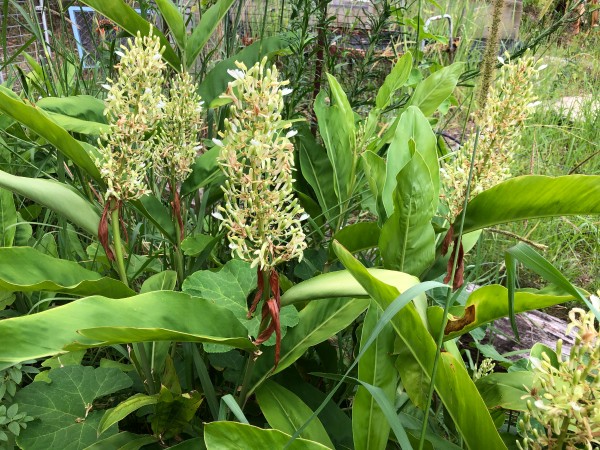
A tropical Spice for Australian gardens
The wild cousins of galangal are found in humid, shaded tropical forest understories of Indonesia, Malaysia, Thailand, Southern Vietnam, and the Philippines. What we find in the grocery stores is a cultivated form (Alpinia galanga var. officinarum) bred through traditional selection. Thailand, Indonesia, and Vietnam are also the main exporters of culinary galangal, and only very little is produced in Australia.
For a commercial crop, you would probably have to live in tropical Queensland, but for an abundant harvest, it would grow all along the coast at least as far down as Sydney, maybe even further South. Galangal is an easily grown “edimental”, meaning a pretty plant that is also edible, something you would use rather for landscaping than growing alongside carrots in your raised garden beds. As a landscaping plant. it’s bold: around two meters high and at least half a meter across. Let’s have a look at the climate first:
Growing Galangal - the climate
Galangal loves the tropical lowlands, but here in our warm-temperate/subtropical Port Stephens, it grows without a problem. It’s definitely frost-sensitive — a tree canopy might give it shelter, but the top growth will still take a hit in a cold snap. This tropical plant thrives on heat, and in cooler weather growth slows down. That summer warmth isn’t just for bulk; it’s what gives the rhizomes their full aromatic flavour.
Growing Galangal -the soil
Our galangal is grown in our Bundabah garden, on land that’s notoriously poor — clay mixed with sand and almost no natural drainage. Of course, we’ve improved it, but it’s still far from ideal. When we built the galangal bed, we terraced the land, raised the soil, and added plenty of organic matter. Even so, it’s nowhere near the rich, loose soil you’d expect for vegetables. It grows beautifully regardless, but the ideal soil would be loamy, well-drained, moderately loose, rich in organic matter, moisture-retentive, and not too high in nitrogen to encourage strong rhizome development. Still — it’s just a spice, not a staple, so a little imperfection is perfectly fine.
Growing Galangal - Sun & Shade
While commercially most galangal is grown in open fields, naturally it is an understory plant. When growing galangal in Australia, it’s often best to plant it as an understory species in your food forest. In the drier climate, some protection is essential — without it, the leaves can scorch in the summer heat. The sweet spot is dappled shade under a light canopy, think gum tree rather than macadamia, which allows galangal to thrive and develop healthy, aromatic rhizomes.
finally - The Harvest!
For optimal flavour development and root size, galangal is harvested after 12-18 months. 12 months in tropical climates and longer, the cooler you live. Either lift the whole root and replant one or two pieces of rhizome, or dig up a part of the plant.
Cleaning the roots is a bit of a task, and a sharp hose and a stiff brush is helpful. I would have tried a pressure washer if I had one.
The roots will last 1-2 weeks at room temperature and 2-3 weeks in the fridge, placed in an airtight container.
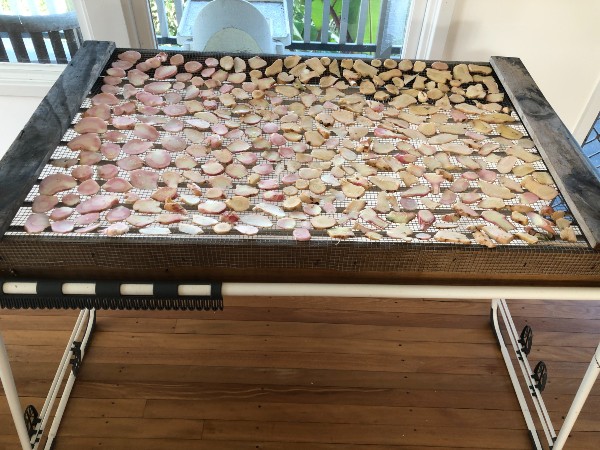
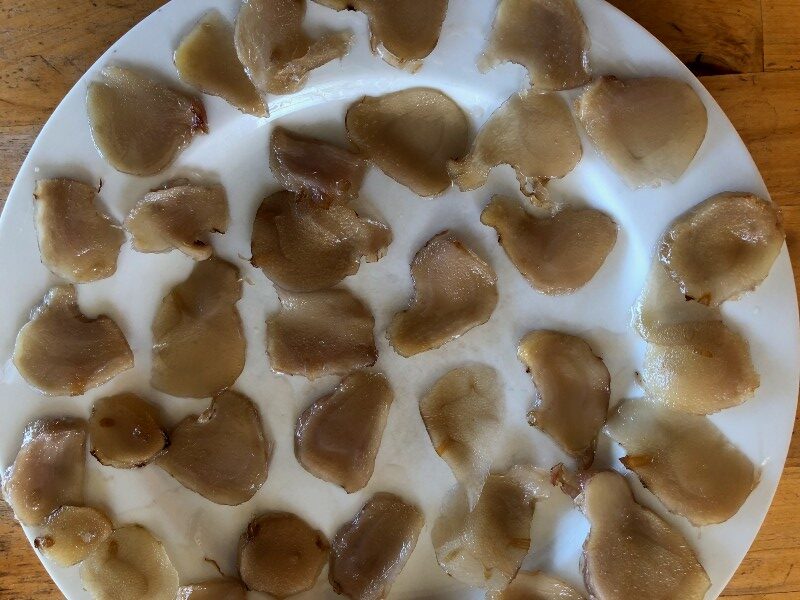
I will talk about recipes another time. So far, I tried pickling, candied galangal pieces (won’t last long, they taste much better than my food photography skills) and drying. At the moment, I’m air-drying thin slices in response to high electricity prices. It seems to work nicely, but the end results remain to be seen.